

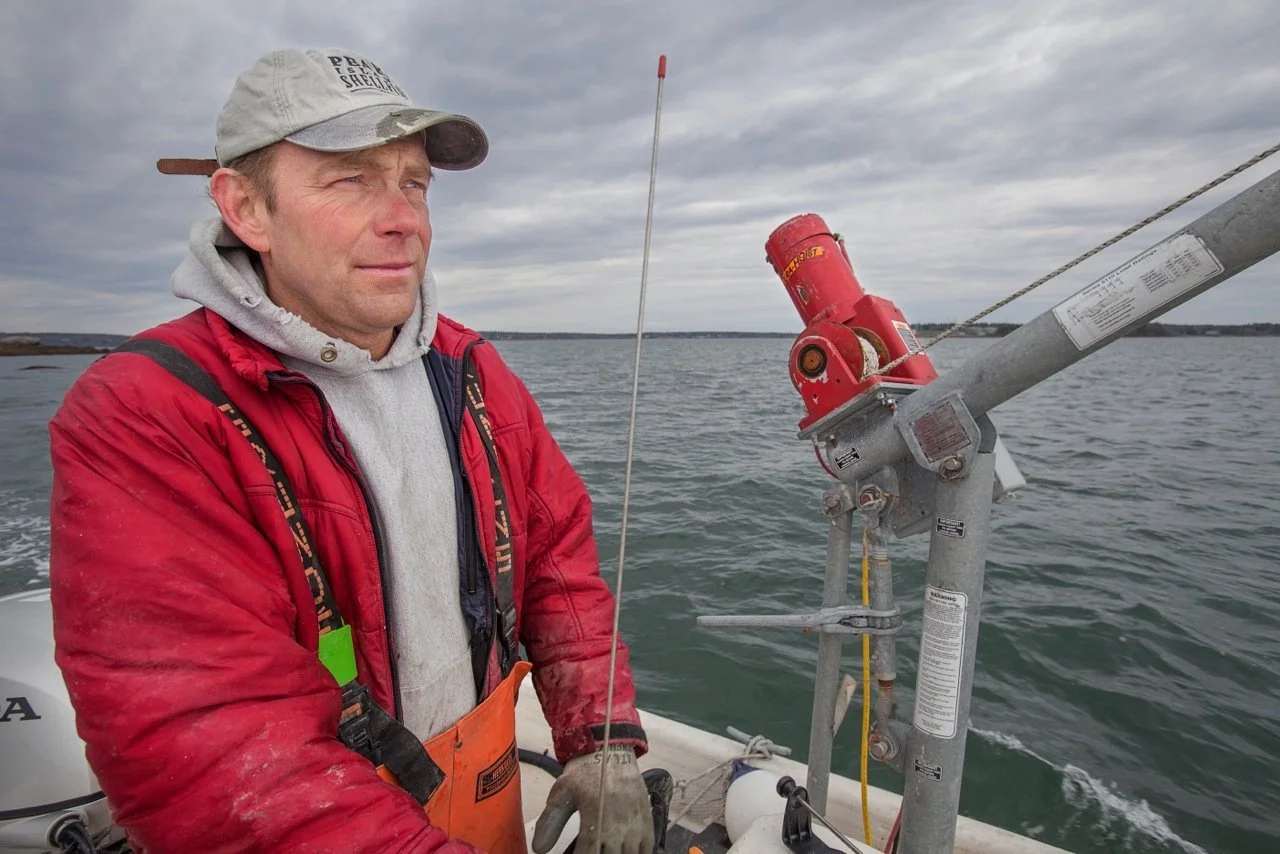
Mark Green - Developing a Citizen Science Observation System on the East Coast
All along our coasts, citizen groups volunteer hundreds of hours collecting information about the ocean. What if we could find a way to use those hours to enhance our understanding of ocean acidification (OA) on the East Coast? Global Ocean Health (GOH) is working now with Dr. Mark Green, oyster farmer and professor of oceanography at Saint Joseph’s College of Maine, to explore that possibility. Green explains, “Every single town on the coast has shellfish committees, friends of this bay or friends of that bay, and it would be nice if these communities could play a role in the broad observation efforts.”

Bill Mook - Spreading Knowledge and Lessons Learned in the Pacific Northwest to Maine and Beyond
In 2010, Global Ocean Health (GOH) organized a workshop for shellfish growers in Maine with the goal of raising awareness in East Coast shellfish-growing communities about ocean acidification (OA) and the issues West Coast shellfish growers were facing. GOH brought experts, including Alan Barton, manager of the Whiskey Creek hatchery in Oregon, to Maine to speak about the massive larval die-offs they’d seen at Whiskey Creek and other hatcheries, and why ocean acidification was the likely culprit. …

Bill Dewey of Taylor Shellfish Tells How GOH Helped Lead a Collaborative Response to OA
Bill Dewey, Director of Public Policy and Communications for Taylor Shellfish FarmsBill Dewey on farm in Washington, is no stranger to tackling ocean acidification (OA). Since oyster larvae production first plummeted in the mid-2000’s, he has been working to rally support for shellfish growers and raise awareness of the threat of OA. “The nature of OA,” says Dewey, “requires a collaborative response. But I don’t think our response would have been nearly as collaborative if it hadn’t been for Brad Warren and Eric Swenson [of Global Ocean Health] and all their efforts.” …
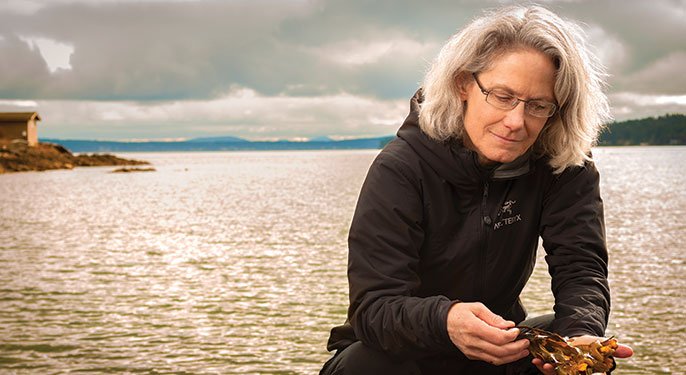
Terrie Klinger - Building Bridges Between Scientists and Industry in Washington State
Dr. Terrie Klinger, Associate Professor in the School of Marine and Environmental Affairs at the University of Washington and Co-director of the Washington Ocean Acidification Center, first met Brad Warren of Global Ocean Health (GOH) in 2008. Their paths crossed many times, and she recognized the value of his work. “Brad is a person who builds bridges,” says Klinger. “He has a long history of working with the fishing community and actively works with several tribes and with the scientific community.” …

Meg Chadsey - A Key Staffer at Washington Sea Grant Weighs in on GOH’s Role in Washington’s Blue Ribbon Panel
Dr. Meg Chadsey, now Ocean Acidification Project Specialist at Washington Sea Grant, witnessed the crucial role Global Ocean Health (GOH) played on Washington State’s Blue Ribbon Panel on Ocean Acidification (OA).
In November of 2011, Chadsey coordinated the Symposium on Ocean Acidification, bringing together scientists, policy makers, and industry and community members who were concerned about the potential impacts of OA. The stage was set, but it was Brad Warren of GOH and others who “capitalized on the energy generated by the symposium, and helped lay the groundwork for Washington’s Blue Ribbon Panel,” says Chadsey. …