


Our Publications
The Ocean Health Report
The Ocean Health Report provides Global Ocean Health perspectives and expert context to help readers understand emerging developments across ocean science, policy, and communities.
Formerly the Ocean Acidification Report, the publication has expanded its focus to explore the interconnected forces shaping ocean health, including ocean acidification, warming, hypoxia, coastal ecosystem change, fisheries, Indigenous leadership, ocean governance, and marine carbon dioxide removal (mCDR).
New Resources on Tribal Sovereignty & Carbon Removal
In June 2026, the Tribal Sovereignty in Carbon Removal initiative released a suite of resources to support Tribal Nations as they assess whether and how carbon dioxide removal may serve their environmental, cultural, and economic priorities.The three publications include a comprehensive report and resource guide exploring CDR opportunities, risks, and governance considerations; a set of guardrails for project developers engaging with Tribes; and a marine CDR reference guide examining Tribal rights, interests, and legal considerations.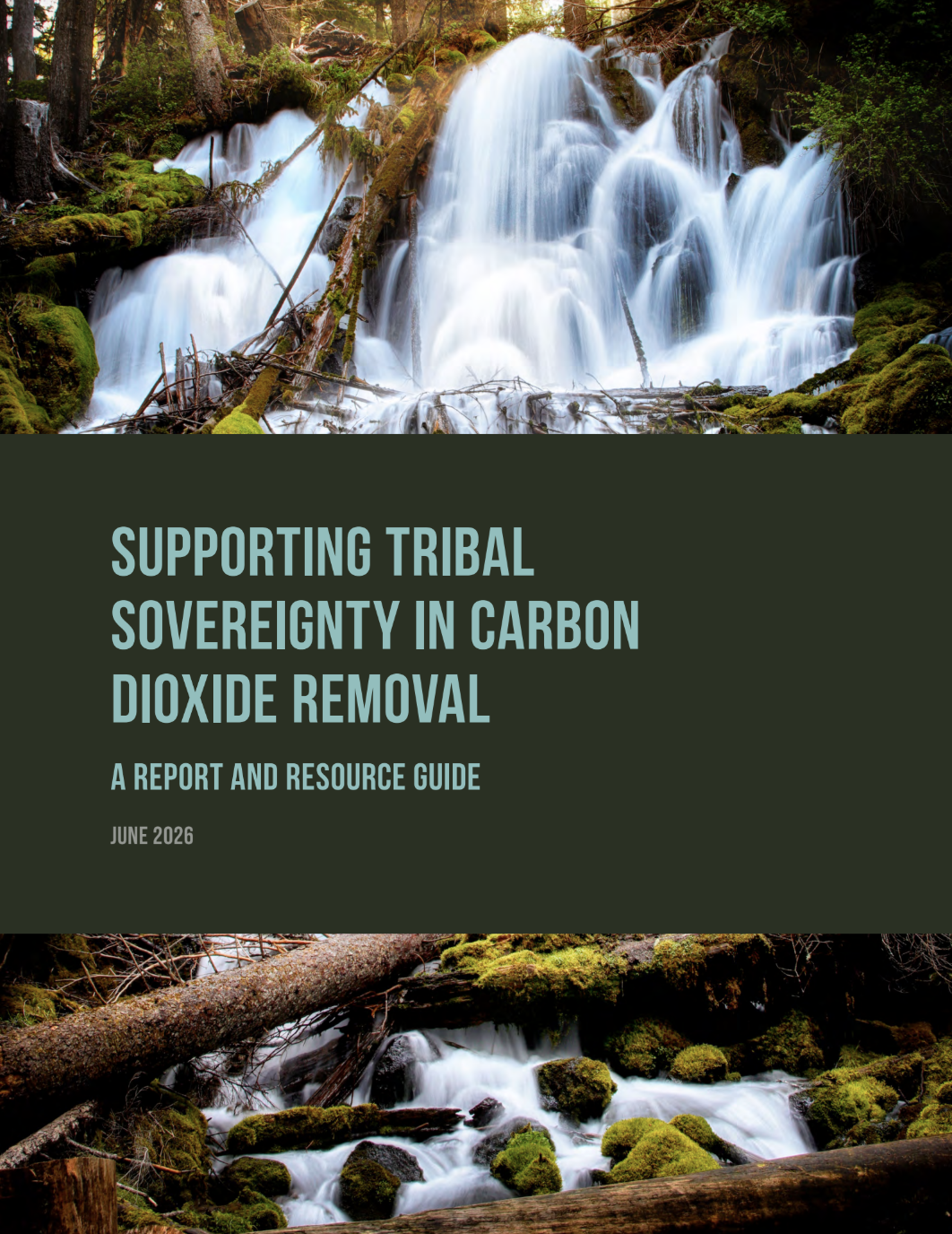
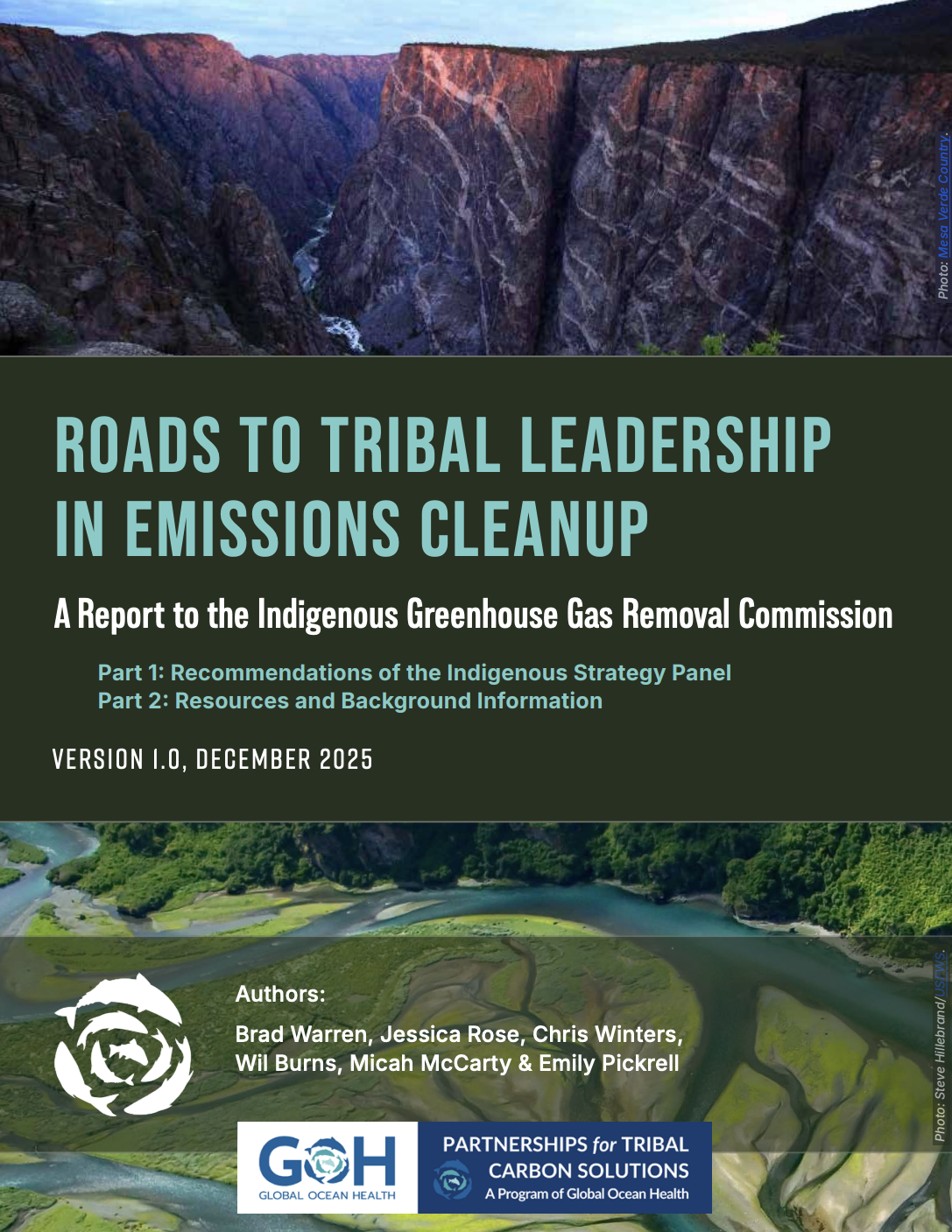
Roads to Tribal Leadership in Emissions Cleanup
A Report to the Indigenous Greenhouse Gas Removal Commission (Dec 2025)
This report presents strategic recommendations from the Indigenous Strategy Panel, a multidisciplinary advisory group convened by Global Ocean Health to support the early work of the Indigenous Greenhouse Gas Removal Commission (IGGRC).
Part I of the report offers recommendations to help guide the IGGRC as it works to build Tribal capacity, coordinate learning, and advance Indigenous leadership in greenhouse gas removal governance. Part II provides background information and resources for Tribes and partners evaluating opportunities and risks in this emerging field
Tribal Carbon Solutions
A supplement to the Ocean Acidification Report, created to support our major initiative, Partnerships for Tribal Carbon Solutions.
View some of our most popular issues:

“I think we’re at a very fortunate CDR space in biochar. It's very much a physical asset that you can see and you can weigh and you can measure the volume of it, which then makes it a little bit more easy to measure.” Freddie Catlow, Co-Founder or Planboo and panelist at AirMiners biomass MRV webinar. Read it Here

Take a Look at the Future—Now • March 2023
Climework’s Orca plant, outside Reykjavik, Iceland, was launched in September 2021 and is working now, so it is possible to get a glimpse at what a functioning DAC plant looks like, and what it does. Read it Here

Federal legislation is needed to advance ocean carbon dioxide removal research in the United States. According to an article in Climate Law tribes should be partners in the regional resource councils called for in model legislation. Read it Here

Africa, which has produced quite a low percentage of the world’s carbon emissions, is a relatively easy target to get to Net Zero and to provide an effective location for carbon removal. Read it Here

The Ocean Acidification Report
The Ocean Acidification Report (March 2014 - September 2021) was a quarterly newsletter that provided the latest news and research on ocean acidification, other climate change induced ocean threats, and related stories. Each issue included a profile of someone actively involved in the fight, as well as National US and International news, resources, and information about upcoming webinars and leading research papers.
During its active years, the OA Report reached over 7,000 people in over 100 countries, and as far as we know was the most widely read publication in its field. Analysis shows that readers archived and referred back to the OA Report – sometimes as much as a year after the date of publication.
The Changing Waters Podcast
A podcast about the ocean, the people who depend on it, and the people who are working to keep it healthy. (February 2019 - September 2021)


Kogia | Karim Iliya
Older Publications
Gearing Up for Carbon Removal: Emerging Tools for Emissions Drawdown on Land and Sea (2019)Getting the Story of Ocean Acidification to Those Who Need It Most (Feb 2014)The Law That’s Saving American Fisheries: The Magnuson-Stevens Fishery Conservation and Management Act (2013)Sweetening the Waters: The Feasibility & Efficacy of Measures to Protect Washington’s Marine Resources from Ocean Acidification (Nov 2012)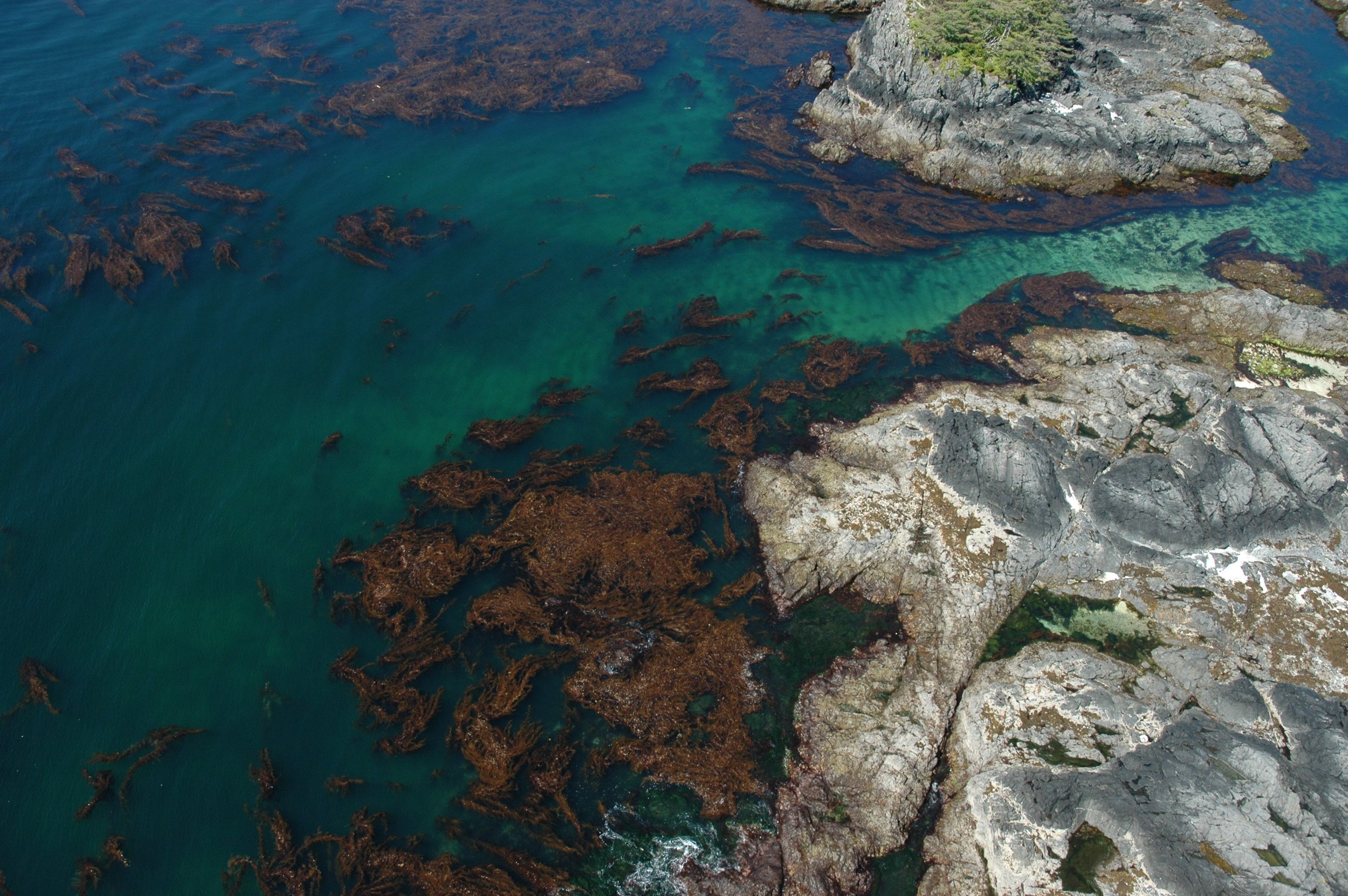
Credit: Alaska ShoreZone Program NOAA/NMFS/AKFSC; Courtesy of Mandy Lindeberg, NOAA/NMFS/AKFSC.