Canada may approve a new oil pipeline. First Nations fear another ‘worst-case scenario’
Mark Carney is considering lifting a tanker ban that has protected coastal communities for 53 years
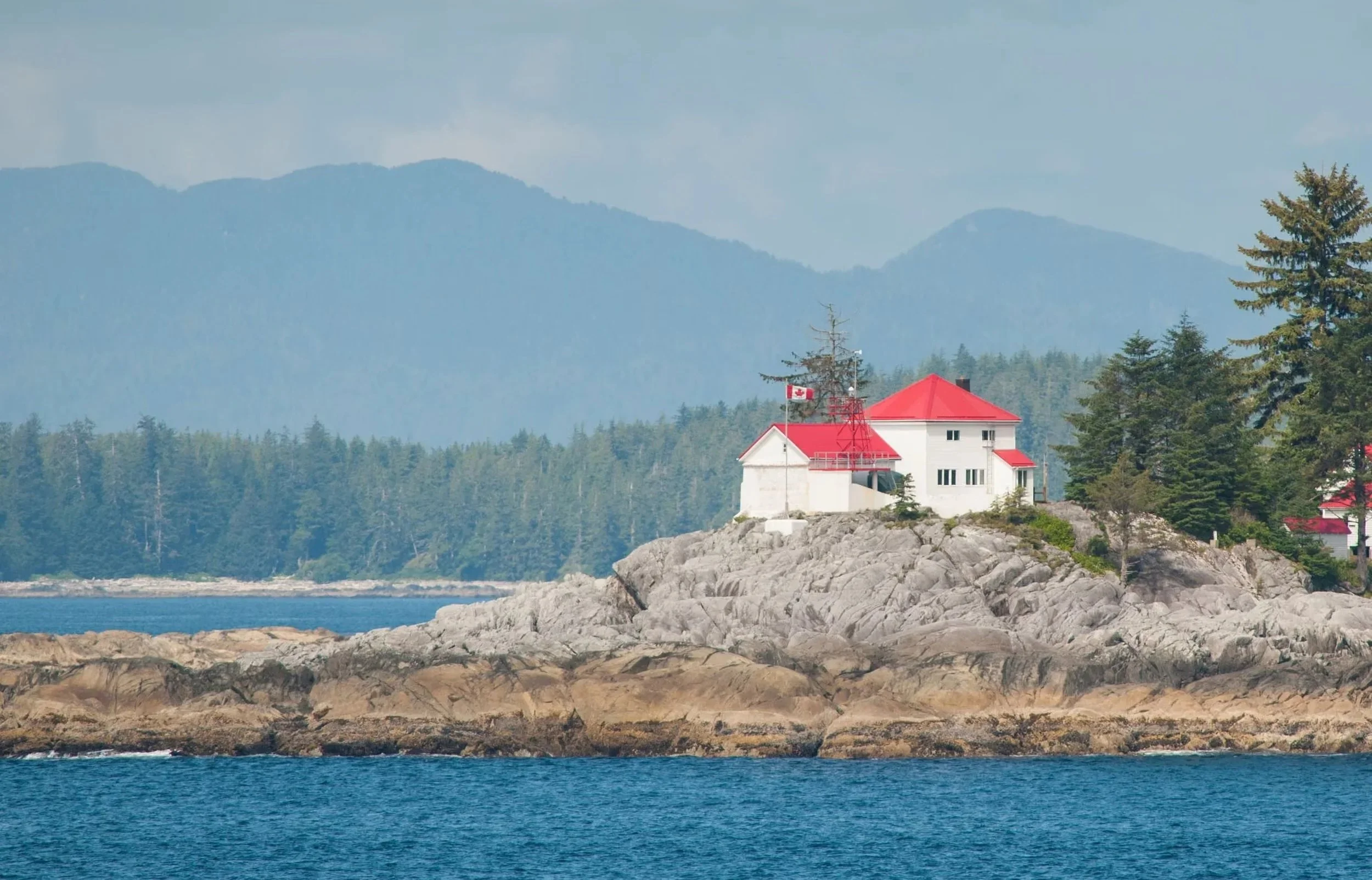
The Ivory Island lighthouse, on the Seaforth Channel, near Bella Bella in British Columbia, Canada. Photograph: Michael DeFreitas North America/Alamy
The Guardian | Dec 7, 2025
By Leyland Cecco
The distress call went out to the Canadian coast guard station after midnight on an October night. The Nathan E Stewart, an American-flagged tugboat, sailing through the light winds and rain of the central British Columbia coast, had grounded on a reef.
The captain tried to reverse, moving the rudder from hard over port to hard over starboard. The boat pivoted but did not move, and the tug repeatedly struck the sea bed.
Four hours later, the ship began taking on water, and leaking diesel into the sea. That evening, a coast guard helicopter confirmed the “worst-case scenario”: a large sheen of diesel oil on the water was visible outside of a containment boom. In total, 110,000 litres spilled near the entrance to Seaforth Channel.
“I remember being in my office later that day getting calls from elders in the community. Some were crying and very upset. They talked as though we had lost someone in our community. People were devastated,” said Marilynn Slett, chief councillor of the Heiltsuk Nation, whose community of Bella Bella was 10 nautical miles from the grounding. “The spill contaminated our primary harvesting sites, causing immediate economic loss that are still ongoing today.”
Nearly a decade after the 2016 disaster, the nation is still fighting for compensation for the losses it bore, including the destruction of clam gardens they had cultivated for centuries. And their lengthy and tiring battle has returned to the spotlight as Mark Carney, the prime minister, supports a pipeline project that would ferry bitumen across Alberta and British Columbia. Part of that would involve lifting a tanker ban that has been in place for 53 years.
Against the backdrop of a trade war and the climate crisis, Canada is in a difficult position. It is the world’s fourth-largest oil producer with the fourth-largest reserves, outproducing most members of Opec. But swathes of the country are also warming faster than the rest of the world, and communities are facing the devastating effects.
Grappling with those two realities, Carney has pledged to help Alberta with a pipeline that would move “at least one million barrels a day” to Asia. With new legislative powers, Carney’s government could also slash permitting and approval delays and is weighing lifting the moratorium on tanker traffic along the BC north coast.
For many, that ban, formalized into law in 2019, reflects the inherent danger of shipping oil through a region of tempestuous weather, physical hazards and deeply revered marine ecosystems.
“It’s spectacularly dangerous to conceive of putting a pipeline to northern BC and hauling that oil across the Gulf of Alaska to Asian markets,” Rick Steiner, who was one of the first on the scene of the 1989 Exxon Valdez disaster, told the Canadian Press. “It should not see the light of day.”