Early season sightings and strandings of gray whales in Washington indicate this species is in more trouble than we thought
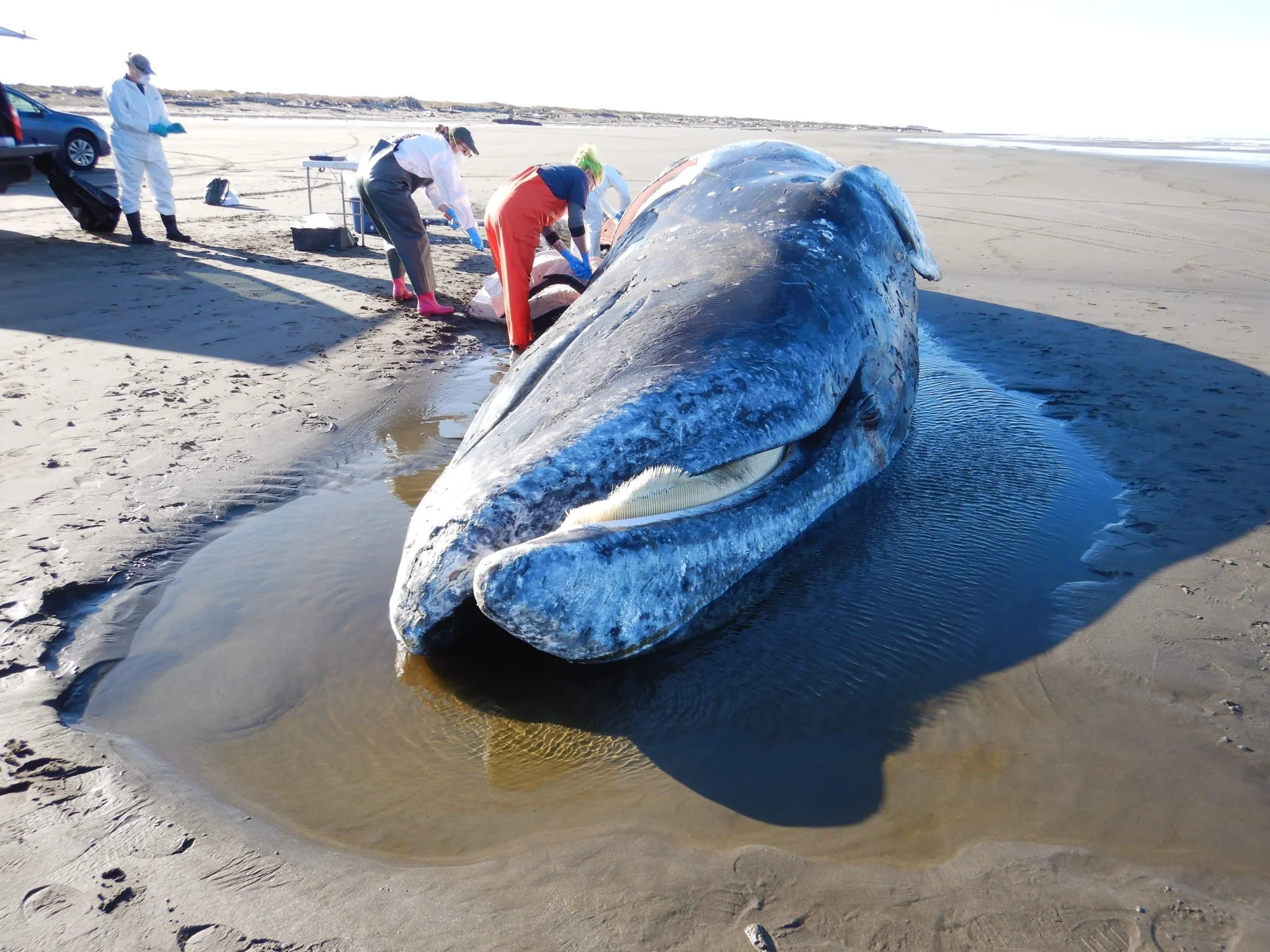
Cascadia Research, WDFW, and a pathologist from the Washington Animal Disease Diagnostic Laboratory examine a female gray whale in Ocean Shores, 4 April 2026. Cascadia Research, NMFS permit 24359
Cascadia Research Collective
April 13, 2026
Since 1 April 2026, 6 dead gray whales were found in Washington, bringing the total so far this year to 9. This represents the highest annual number of strandings by this time of year that we have ever recorded. This level of early season mortality, combined with sightings of multiple live gray whales in poor nutritional condition in unusual areas around Puget Sound and changes in behavior patterns in the “Sounders” group of whales, suggests that gray whales continue to face significant challenges and we may be facing another year of elevated mortality.
Gray whale strandings in Washington typically occur from April through June, when whales are migrating along the Washington Coast to their feeding grounds in the Bering Sea. Our average number of annual gray whale strandings in normal years is 5, but since the onset of the Unusual Mortality Event (UME) in 2019, we have been averaging over 15 per year. Our peak number of strandings usually occurs in May, which is why this number of dead whales so early in the stranding season is concerning. In those whales where examination was possible, malnutrition continues to play a major role in the death of these whales.