Rising Temperatures Could Trigger a Reptile Sexpocalypse
The sex of many turtles, crocodilians, and other reptiles is determined by the temperature at which their eggs incubate. Global warming could doom them.
Scientific American | December 16, 2025
By Elizabeth Preston edited by Kate Wong
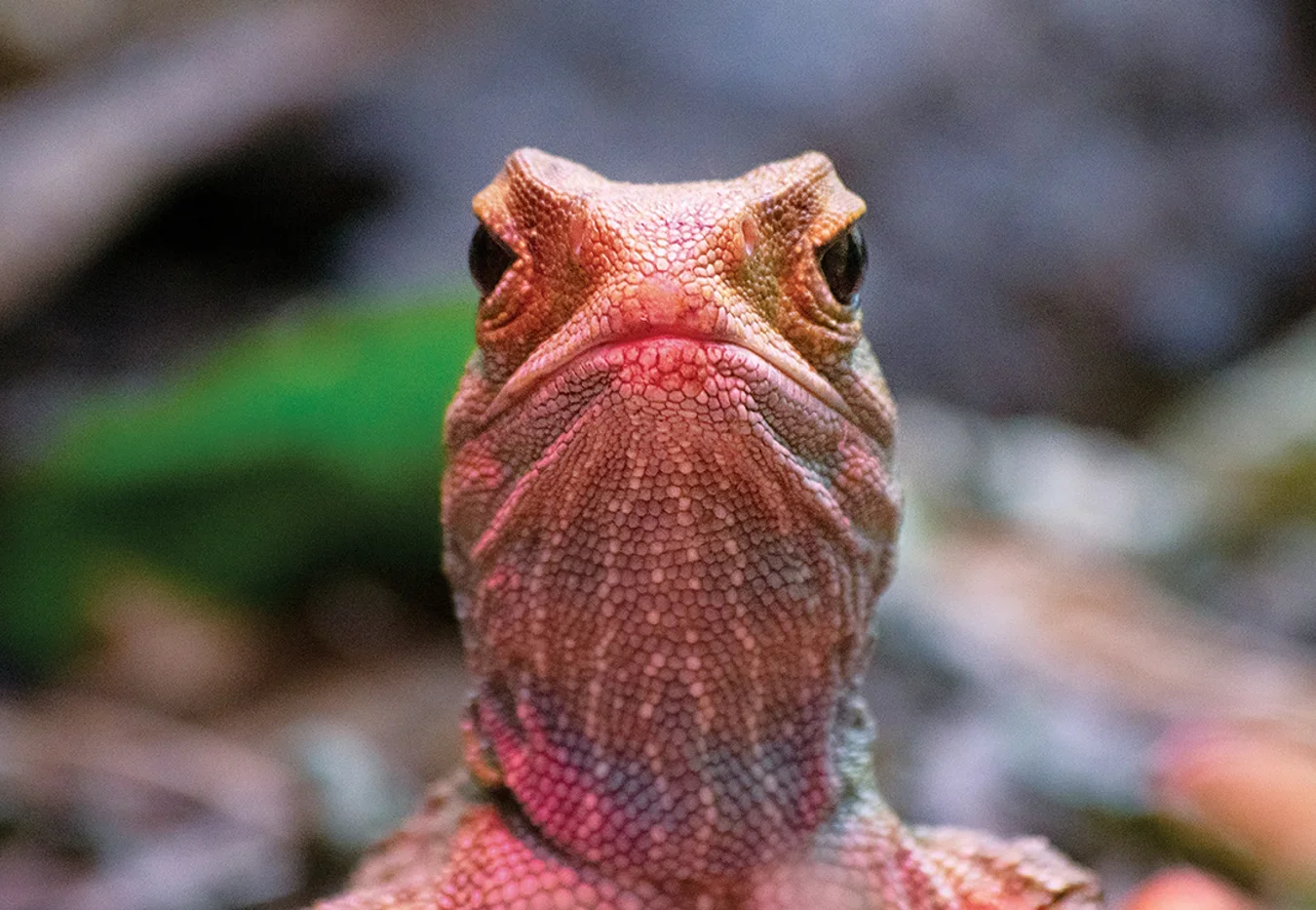
The tuatara, a reptile found only on small islands in New Zealand, is facing a dangerous combination of habitat restriction and skewed sex ratio. Photo: Melinda Mackenzie/iStock/Getty Images Plus.
Under no light but the stars, a green sea turtle hauls herself out of the surf and onto the familiar sand of Alagadi Beach on the northern coast of Cyprus. She doesn’t notice any predators as she makes her way up the beach; tonight will be the night.
When the turtle reaches a satisfactory spot, she nestles into the warm sand and begins excavating a deep pit. Nothing can distract her; she’s gone into a kind of trance. She pushes out 100 wet, leathery eggs into the pit. The turtle won’t move until she has completed her task, even if humans creep close to measure her shell and tuck a temperature logger in among her eggs. She finishes laying in about 20 minutes, but her work isn’t done. Still focused, she spends another few hours laboriously scooping the sand over her eggs. Then she turns around and crawls back into the ocean.
In about two months her babies will emerge from that sand and make a mad dash to the water. They’ll have to fend for themselves—their mother is done caring for them. She’ll never know the curious fate that befalls her offspring: nearly all of the hatchlings will be female.
Many reptiles differ from typical vertebrates in that their sex is not determined by their genes. They lack sex chromosomes such as the X and Y inside human cells. Instead the temperature of their nest pushes them toward becoming male or female.
For green sea turtles, if the temperature is about 29 degrees Celsius (84 degrees Fahrenheit) during a critical mid-incubation window, the babies will hatch as a half-and-half mix of females and males. But the hotter the nest, the more they will skew female. In the dark sand of Alagadi Beach, the eggs incubate at a toasty 33 or 34 degrees C, resulting in broods that are overwhelmingly female.
The reptiles that have temperature-dependent sex determination—most turtles, as well as all crocodilians (crocodiles, alligators and their kin), some lizards, and a unique creature from New Zealand called the tuatara—belong to lineages that have survived Earth’s climatic ups and downs for millions or even hundreds of millions of years. Yet the present day brings a confluence of problems they haven’t ever encountered in their long history, including anthropogenic habitat loss and a planetary thermostat gone haywire.