The Scientists Making Antacids for the Sea to Help Counter Global Warming
The world’s oceans are becoming dangerously acidic. A controversial proposal would raise the pH — by mixing chemicals into the water.
The New York Times Magazine | Jan 8, 2026
By Ferris Jabr
To report this article, Jabr interviewed more than 25 experts and joined a team of scientists on a first-of-its-kind carbon-removal experiment in the Gulf of Maine.
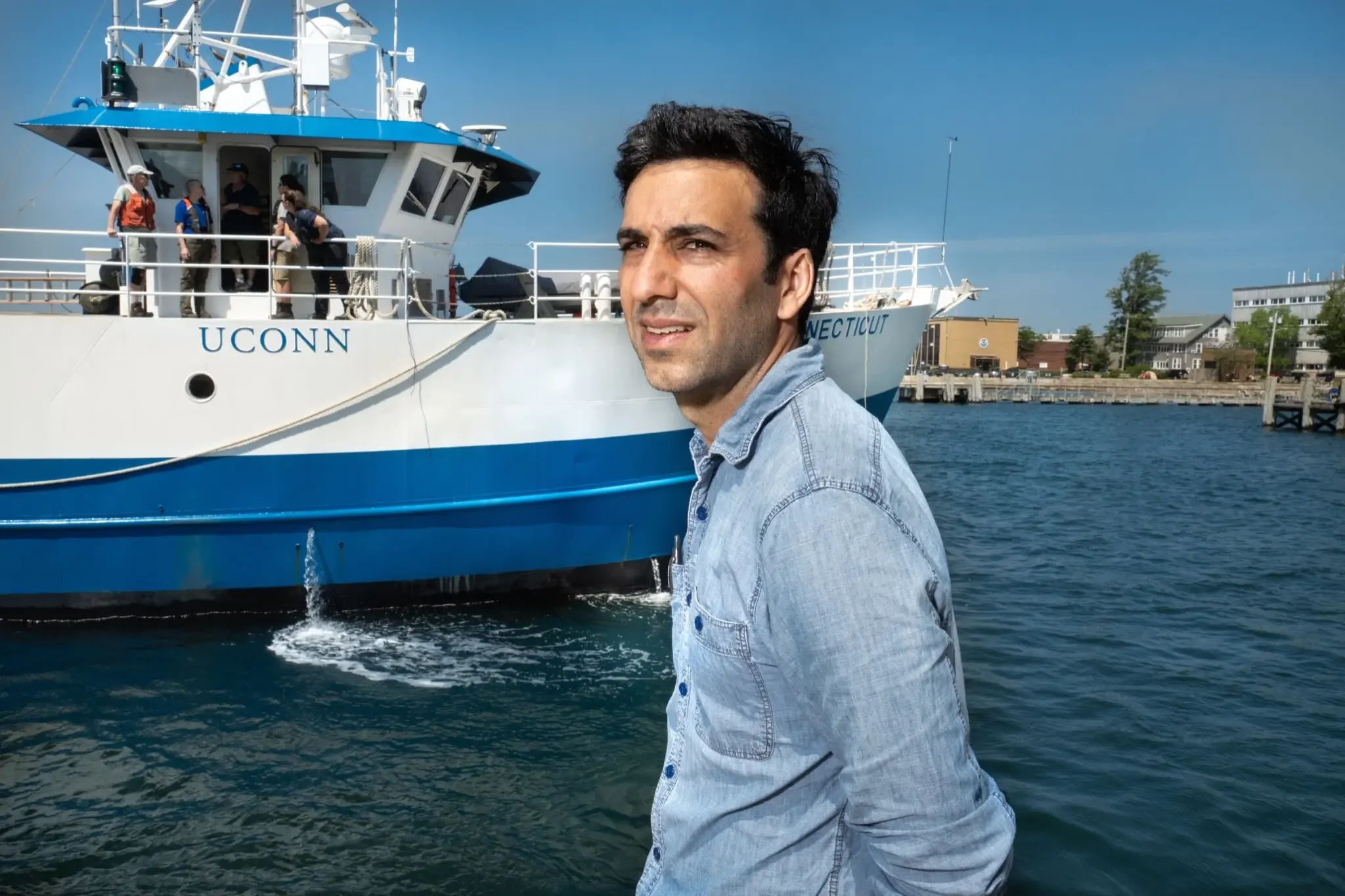
Adam Subhas of the Woods Hole Oceanographic Institution in Massachusetts. Credit: Alexander Coggin / The New York Times.
A few months ago, the oceanographer Adam Subhas and his colleagues turned the sea red. At first it looked as if the scientists had dumped a few barrels of beet juice into the Gulf of Maine. A narrow band of crimson water lingered in the wake of one of their chartered vessels, briefly tinging violet here or magenta there when tumbled by wind and waves. As the ship began to make a circle, the maroon trail elongated and expanded, soon filling a much larger part of the sea. Onlookers on a passing vessel might have mistaken the scene for the aftermath of a shark attack.
It was, in fact, something even more unusual — and, to some people, no less alarming. The scientists were deliberately pumping about 16,200 gallons of sodium hydroxide, more commonly known as lye, into the ocean, along with a red dye that made the solution easier to track. It was the final phase of a study on a promising yet controversial climate intervention, one that could simultaneously mitigate both global warming and another, equally terrifying consequence of carbon emissions: the rapid acidification of the world’s oceans.
Since the advent of the industrial age, the oceans have absorbed about one-third of humanity’s heat-trapping carbon emissions. Were it not for that immense buffer, the planet would be substantially warmer and more tempestuous than it is today. As carbon dioxide from the atmosphere dissolves into the ocean, however, it reacts with seawater to form carbonic acid, which disrupts the ocean’s chemical balance and reduces its capacity to absorb more carbon. Prolonged acidification will severely threaten marine ecosystems and fisheries on which more than one billion people depend.