Tule River Tribe targets carbon credit revenue with $14.7M biochar investment
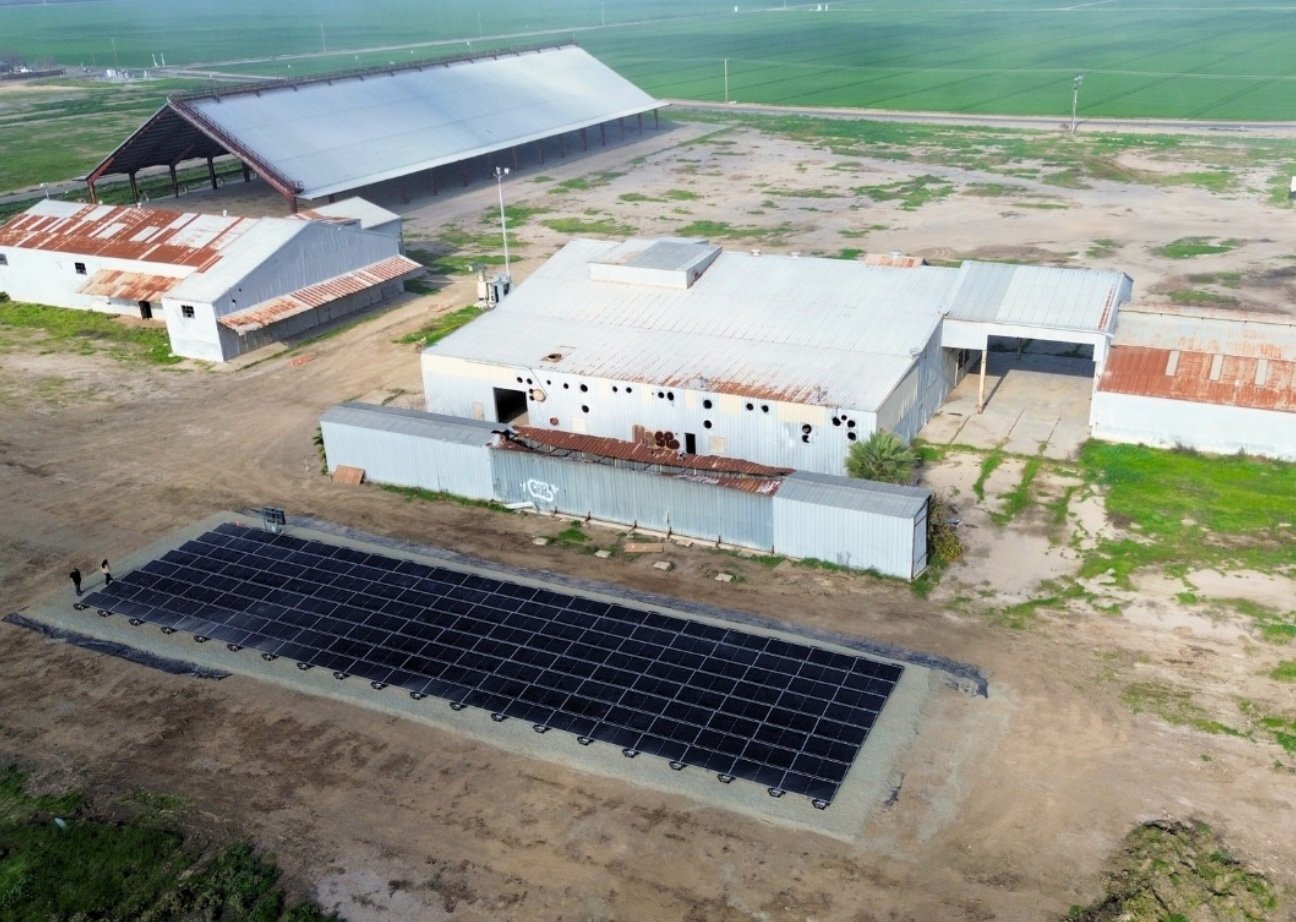
The former cotton gin site near Tipton, Calif., where the Tule River Economic Development Corp. plans to build a $14.7 million biochar facility. (Photo: TREDC Facebook)
Originally published by Tribal Business News on Feb 17, 2026
By Chez Oxendine
The Tule River Economic Development Corp. is deploying a $14.7 million Environmental Protection Agency grant to build a biochar facility in California’s Central Valley, positioning the tribe to generate renewable electricity and tap into carbon credit markets.
The plant, planned for a former cotton gin site near Tipton, is expected to process up to 31,500 tons of woody biomass annually, producing about 4,500 tons of biochar and roughly 4,000 megawatt-hours of renewable power each year, according to TREDC estimates.
At current voluntary carbon market prices of about $150 per ton, each ton of biochar — representing roughly one ton of carbon dioxide removed from the atmosphere, depending on carbon content and application — could create an additional revenue stream alongside electricity sales and agricultural distribution.
Thomas E. Wilbur, chief executive officer of TREDC, said the project grew out of a federal Climate Pollution Reduction Grant the tribe pursued as environmental pressures intensified across the Central Valley.
Thomas E. Wilbur, CEO of Tule River Economic Development Corporation“We took up the banner through the EDC for the tribe,” Wilbur said. “We see a huge amount of potential waste out there, and we wanted to put that to use.”
The facility will use pyrolysis technology developed by ARTi, a five-unit system that heats biomass in low-oxygen chambers to convert it into biochar, a stable, carbon-rich material used to improve soil health and water retention. After an initial injection of natural gas, the system recycles its own heat, converting hydrogen and carbon monoxide into electricity.
Vanessa Felix, quality assurance manager and project manager, said the system is designed to handle a wide range of woody material.
Biochar’s porous structure improves soil health, increases water retention and can sequester carbon for hundreds to thousands of years. TREDC plans to sell the product to growers across the region and use it in local agricultural soils.
“It’s good for the earth,” Felix said. “We plan to put it back into the agricultural soils to improve crop yield, and of course provide jobs for the nearby community and the tribe. For us, it’s not necessarily waste, because this product can be used to create value.”
Biochar stores carbon because the heating process transforms plant material into a stable, carbon-rich solid. Studies tracking biochar in farm soils have found that most of this carbon remains in place for years, with limited change even after more than a decade of tilling and fertilizing, according to a report published in Agronomy, a peer-reviewed agricultural journal. Researchers also found that adding biochar can increase total soil carbon while improving water retention and nutrient retention.