Why this tribe is buying up hundreds of acres of farmland — and flooding it
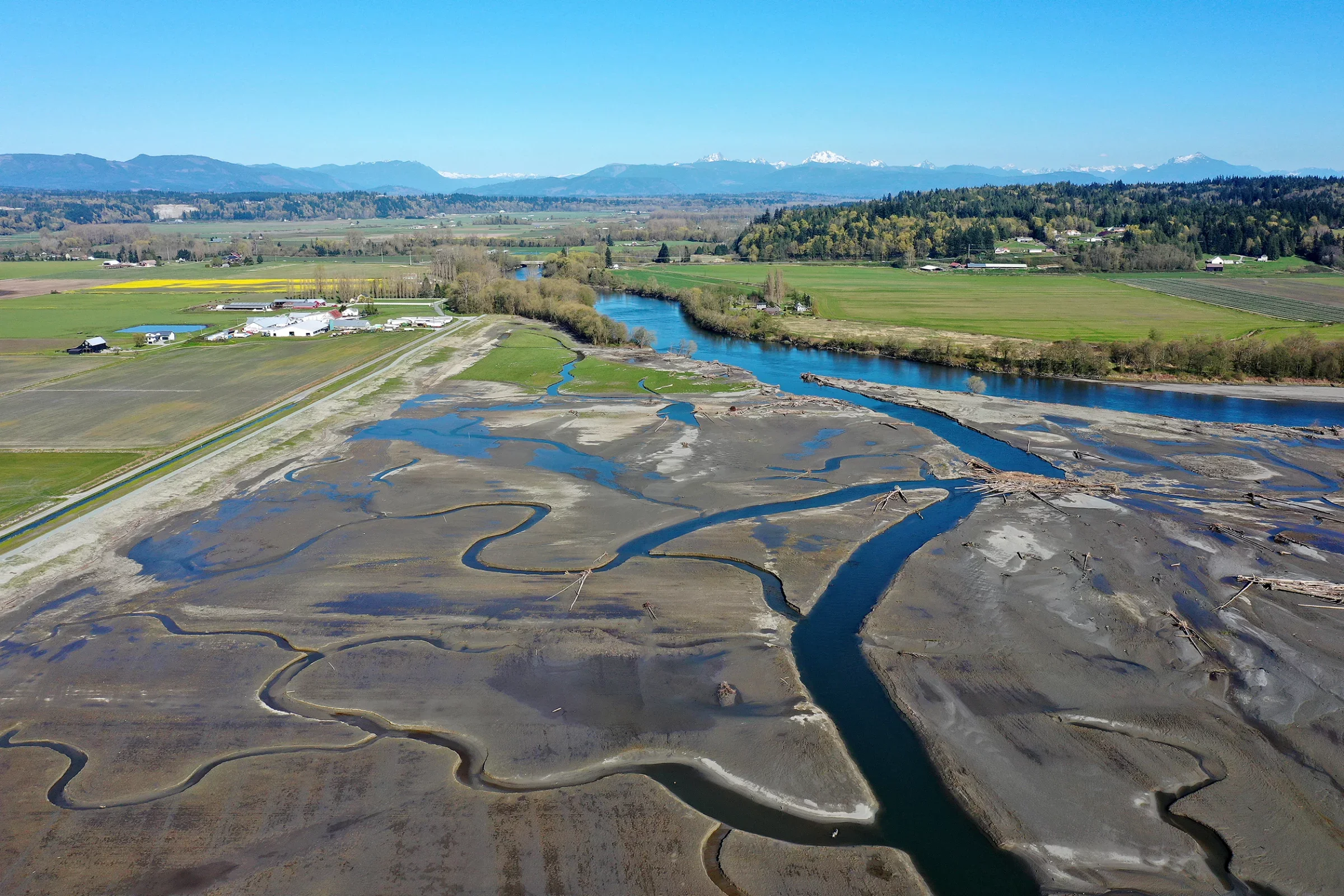
A new levee built by the Stillaguamish Tribe, left, separates farmland from newly restored wetlands at the mouth of the Stillaguamish River near Stanwood, Washington, on April 8, 2026. Source: Megan Farmer/KUOW
Originally published by NPR - Climate
By John Ryan
Scott Boyd walks through deep mud where the Stillaguamish River empties into Puget Sound, an arm of the Pacific Ocean.
This flood-prone river mouth north of Seattle changed dramatically in October when the Stillaguamish Tribe removed two miles of earthen levee. The ridge of dirt kept the river and the tides from spreading onto nearby farmland. Once a giant excavator bit into the levee to breach it, the tribe welcomed tidewater onto the land for the first time in over a century.
"Before, it was a dairy operation, and now it's a big tidal marsh," Boyd, a Stillaguamish tribal member and fisheries manager, says while looking out at the new 230-acre wetland.
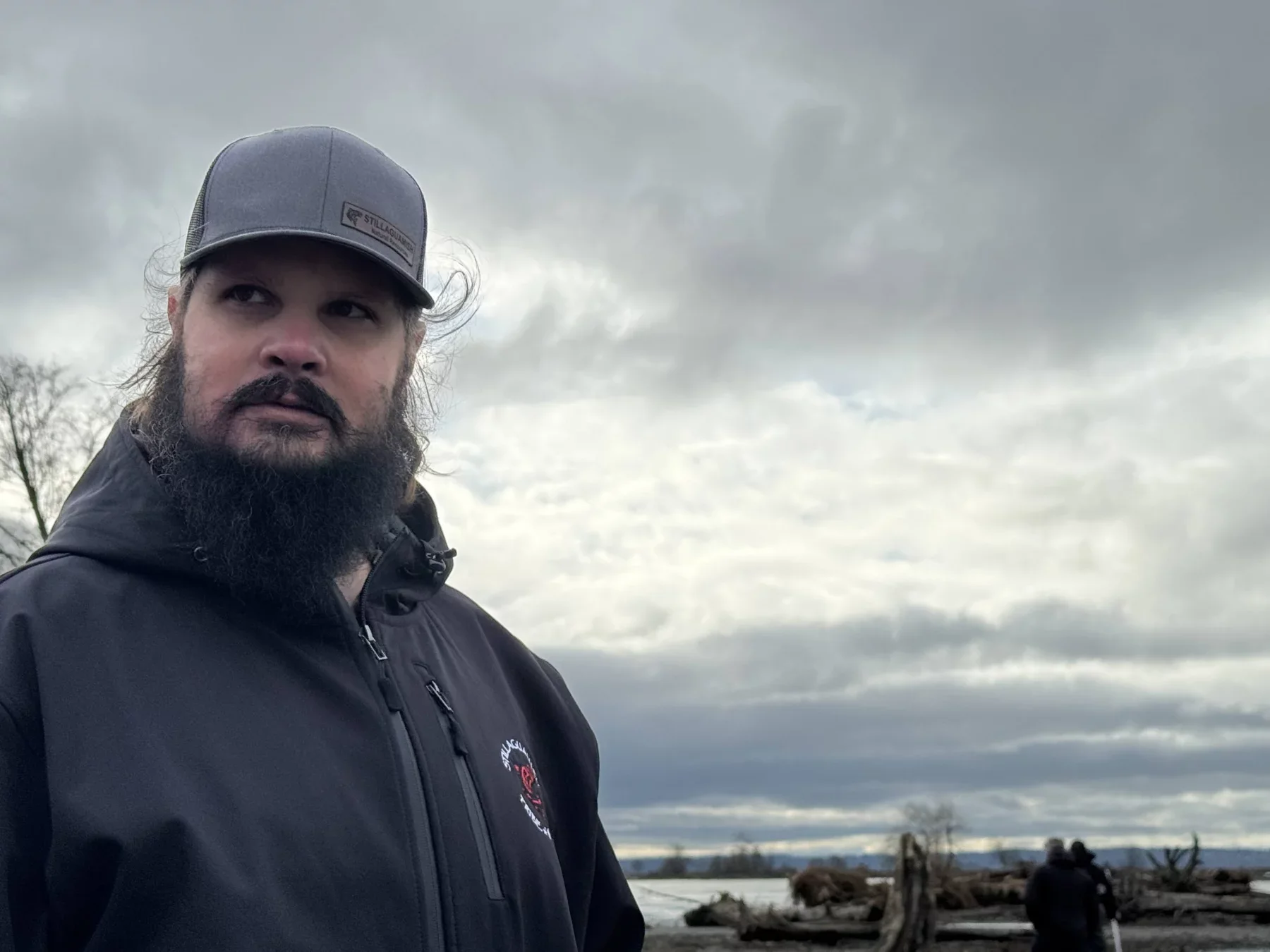
Stillaguamish Tribe deputy fisheries manager Scott Boyd at the mouth of the Stillaguamish River on Dec. 19, 2025. Source: Kathleen Lumiere
Tidal marshes are crucial nurseries for young Chinook salmon and a focal point for efforts to bringthese fish back from the brink of extinction. The Stillaguamish Tribe has been buying riverfront land in its traditional territory and removing levees to turn farmland into wetland with the hope of restoring Chinook.
Boyd's tribe of about 400 people only gained federal recognition in 1976, more than a century after tribal leaders signed the Treaty of Point Elliott with the U.S. government in 1855.
"Our official reservation is pretty small, I want to say less than 100 acres," Boyd says. "And it wasn't granted to us until maybe 10 years ago."
Over the past 15 years, the Stillaguamish Tribe has purchased 2,000 acres of land for fish and wildlife habitat.
Under the 1855 treaty, the Stillaguamish and other Puget Sound tribes gave up almost all of their land but kept their rights to fish and hunt.
"It is a bit of a bitter pill to swallow to buy back the land that we essentially traded for the resource, the fish, but it's what we have to do to get things back on track," Boyd says.
What the tribe wants to get back on track is salmon.
A marsh reborn
Decades of environmental damage have left many West Coast salmon runs on the brink of extinction. Chinook salmon, the largest and most prized of salmon, is a federally threatened species in Puget Sound.
In 2025, so few Chinook salmon returned to the Stillaguamish River that the entire tribe was only allowed to catch 26 fish.
"The salmon, it has always been important to our people, to the tribe, to our way of life," Boyd says. "These habitat projects are the best bang for our buck right now."
Depending on the tide and the river level, traversing the new wetland can require anything from a small boat to tall boots.
Narrow water channels snake through the mudflats.
Whole trees, uprooted and carried downriver by recent floods, lie sideways in the mud.
A cloud of shorebirds erupts after probing the muddy ground for food. Hundreds of birds called dunlins wheel above the freshly remade landscape, moving in tight formation like a pulsing, living cloud.
"Watch these dunlins," Stillaguamish Tribe biologist Jason Griffith says. "It's a visual symphony."