New Tools Help Alaska Communities Prepare for Future Changes in Pacific Cod Distributions
Pacific cod fishing communities with few alternative job opportunities and high unemployment are more vulnerable when Pacific cod are less accessible. This is especially true for communities in the southeastern Bering Sea.
NOAA Fisheries | January 15, 2026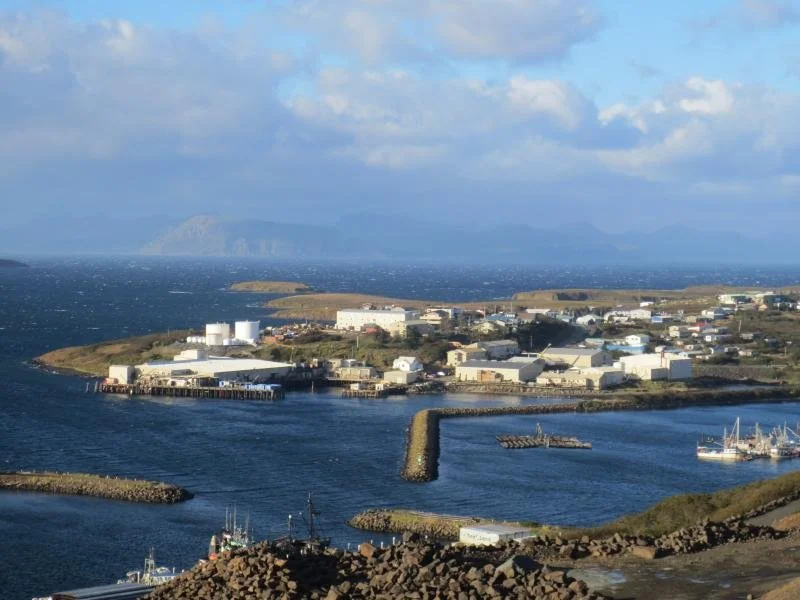
Sand Point, Alaska, is a remote city in the Aleutians East Borough. It was founded in 1898 as a cod fishing station and trading post. Credit: NOAA Fisheries/Connor Maguire
Scientists conducted a new socio-economic risk assessment, combined with statistical modeling, on the risk of coastal Alaskan fishing communities to changes in Pacific cod distributions. Their insights may help these communities prepare and adapt to these changes.
Fishing is central to life in Alaska. North Pacific fisheries, including Pacific cod, support local, state, and national economies. They strengthen cultural ties and food security in coastal communities. The economic and social benefits derived from Alaskan fisheries are deeply connected to the resilience of fishing communities facing changing environmental conditions.
Alaska’s commercial fisheries account for roughly 60 percent of the U.S. seafood harvest, and supply seafood to the United States and the globe. They also provide employment for one in seven Alaskan residents.
Communities Reliant on Pacific Cod Most at Risk
Pacific cod is one of the largest and most important commercial fisheries in the Gulf of Alaska and Eastern Bering Sea. It’s also the lifeblood and economic mainstay for many small coastal fisheries and rural communities across the state. A declining Pacific cod fishery could have significant impacts on these communities.
Alaska Fisheries Science Center scientists found that coastal communities along the southeastern Bering Sea are most vulnerable. They are at greater relative risk if Pacific cod populations shift northward in response to environmental changes. At highest relative risk were those communities within the Aleutians East Borough and Bethel Census Area. The research was conducted as part of the Alaska Climate Integrated Modeling project.