North Pacific Fishery Management Council action to establish a limit on Western Alaska chum salmon bycatch in the Bering Sea pollock fishery
Originally issued by the North Pacific Fishery Management Council on February 12, 2026.
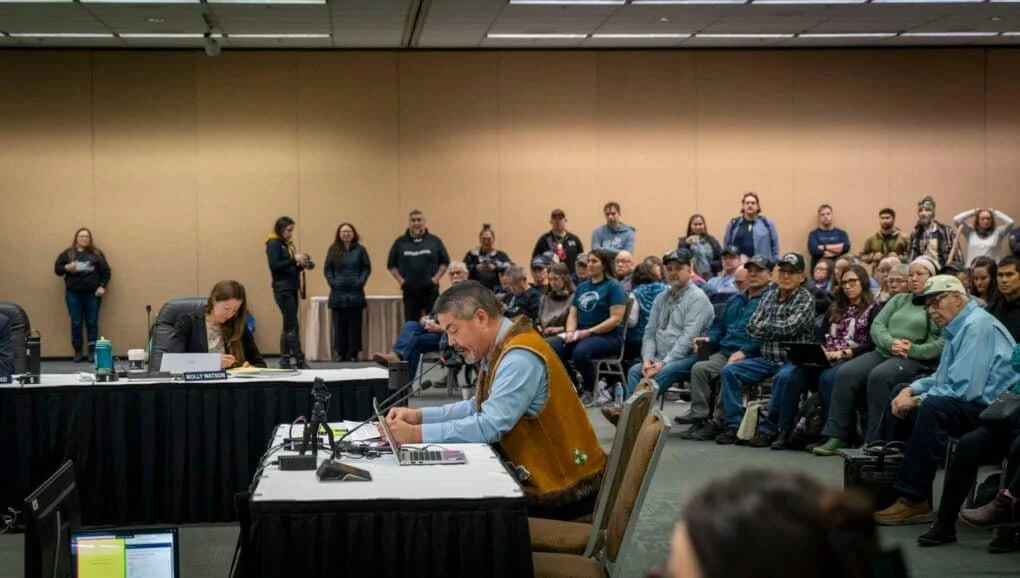
Photo Courtesy Tanana Chiefs Conference
At its February 2026 meeting, the North Pacific Fishery Management Council (Council) took action to establish a bycatch limit and corridor closure for Western Alaska chum salmon in the Bering Sea pollock fishery, and other measures to minimize such bycatch. The Council received testimony from more than 170 people, including Tribal leaders and members, Community Development Quota (CDQ) groups, Alaska communities dependent on pollock, and pollock fishery participants, that helped inform the Council’s final recommendation to the Secretary of Commerce. The Council’s action must be consistent with the Magnuson-Stevens Act and several other federal laws. In summary:
The Council recommends a limit of 45,000 Western Alaska chum salmon with a corridor closure for the Bering Sea pollock fishery.
Establishing a Western Alaska chum salmon cap was critical to the Council’s approach, as annually 80% or more of the chum in the overall bycatch are not from Western Alaska. The majority are Russian and Asian hatchery chum, documented through annual NOAA genetic sampling.
All western Alaska chum salmon caught as bycatch in a large corridor area north of Unimak Pass count toward the cap during a migration time period identified as critical for Western Alaska chum salmon (June 10 – August 31), which overlaps with the pollock fishery B season. The corridor covers the area where consistently more than 80% of the Western Alaska chum bycatch is caught.
If a pollock fishing sector reaches its cap, it closes a significant area in the Bering Sea that reflects a corridor for Western AK salmon passage and the majority of the pollock catcher vessels’ fishing grounds.
The cap is intended to directly change behavior. Vessels will use NOAA genetic data from previous seasons and newly available in-season genetic data from the Bristol Bay Science and Research Institute to try to avoid reaching the limit.
The Council’s recommendation also includes changes to the pollock fishery’s contractual salmon avoidance plans. The changes focus the fishery on avoidance of western Alaska chum salmon, incorporating genetics information into inseason avoidance measures, and more transparency in reporting by requiring greater communication among the pollock fishery, salmon users, Alaska Native Tribes, and Tribally-authorized consortia and fish commissions.
The Council’s final recommendation for a preferred alternative at this meeting was also based on the information available in the draft Environmental Impact Statement (EIS), which included contributions from cooperating tribal agencies. The Council focused on minimizing bycatch of western Alaska-origin chum salmon, as returns of these fish have declined substantially in recent years and reduced or eliminated in-river harvest opportunities. Salmon are integral to the cultural, nutritional, economic, and spiritual well-being of western and interior Alaska residents, families and communities throughout the region who are experiencing severe negative impacts from continued low salmon returns. The pollock fishery is also integral to the viability of many communities in the Alaska Peninsula and Aleutian Islands and is the primary revenue source for the Community Development Quota program, which provides community economic development in 65 western Alaska villages.
Available science indicates recent declines in chum salmon populations across many regions of the North Pacific, including Canada, Japan, Russia, Korea, and the U.S., appear to be driven by warmer water temperatures in both the marine and freshwater environments which impact juvenile survival, prey availability and quality, metabolism and growth rates, and reproductive rates. However, western Alaska chum salmon are also taken as bycatch in the Bering Sea pollock trawl fishery. While responsible for less than 2% of western Alaska chum mortality from all sources annually, bycatch reduces the amount of salmon that return to western and interior Alaska rivers. Public testimony highlighted that even small increases in the number of salmon returning back to these rivers and the communities that rely on them represents a substantial benefit, and the Council‘s action is intended to help address these concerns.
The analysis also highlighted recent bycatch performance in the pollock fishery, and noted that while there are numerous variables involved in chum interactions in the fishery, the fleet has reduced its chum bycatch by nearly 95% over the past four years through voluntary measures in existing salmon avoidance plans which will now become required.
The next required step is for NOAA to respond to comments and prepare a final EIS and proposed regulations. The full description of the Council’s final recommendation for a preferred alternative is available here.
___
The North Pacific Fishery Management Council is one of eight regional councils established by the Magnuson-Stevens Fishery Conservation and Management Act (MSA) in 1976 to manage fisheries in the 200-mile Exclusive Economic Zone, 3 miles off the coast of Alaska. Per the MSA, the 11 voting members serving on the Council are regional experts appointed by the Secretary of Commerce; designees of the state marine fisheries commissioners from Alaska, Washington, and Oregon; and the Regional Administrator of the National Marine Fisheries Service. Federal fisheries decisions must be consistent with the MSA and other federal laws. The Council, along with its advisory bodies, was formed so federal fishery management decisions could be made at a regional level, emphasizing public input.