Oysters Clean Up More Nitrogen Pollution Than We Thought
New research has revealed that significant amounts of excess nitrogen in coastal waters are buried as oyster reefs grow and that some reefs trap more nitrogen than others.
By Lisa S. Gardiner
Originally published by Eos, June 6, 2026
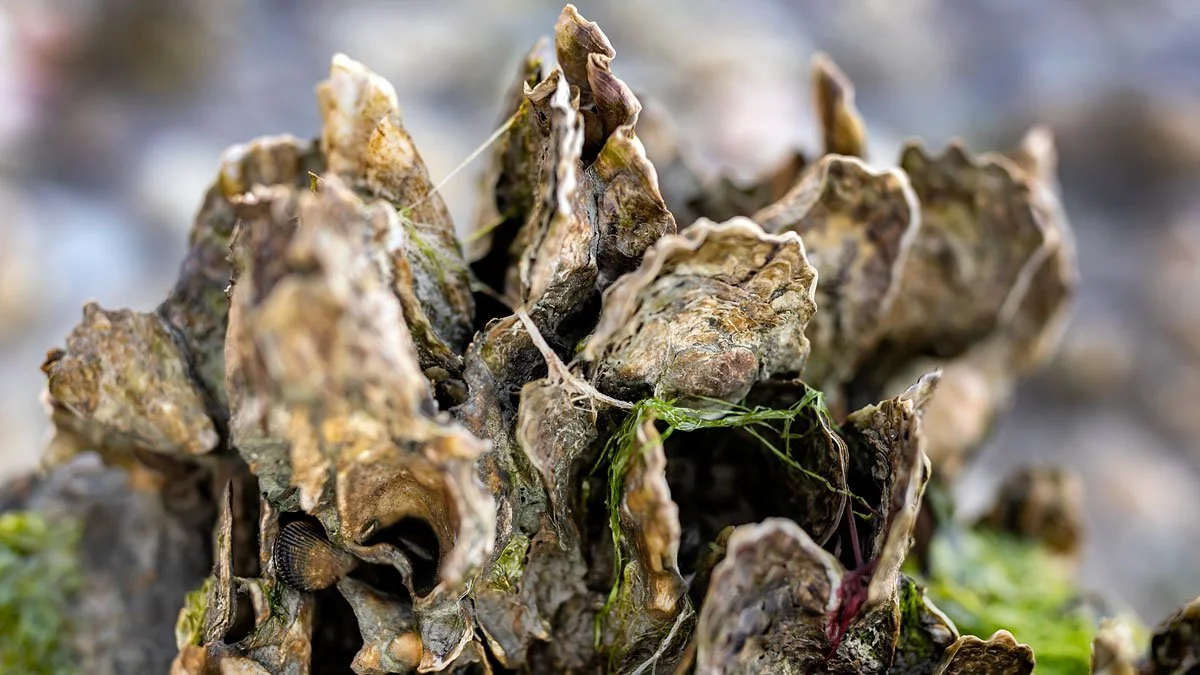
Eastern oysters (Crassostrea virginica) cement their shells together to form reefs along Atlantic coasts. Credit: Johnny Andrews/UNC-Chapel Hill
After centuries of overharvesting and environmental degradation reduced the world’s oyster reefs by 85%, restoration is bringing the conglomerations of thick-shelled mollusks back to coastal waters. And their return may have more benefits than scientists realized, new research suggests.
Oysters were initially restored to boost depleted fisheries, according to Rachel Smith, a marine ecologist at the University of California, Santa Barbara. As oysters cement their shells together into reefs, they create habitats for myriad species, including fish. “Oysters build the foundation of an entire ecosystem,” Smith said.
These days, oyster reefs are restored for reasons extending beyond ecology, including to rid coastal water of excess nutrients such as nitrogen. This pollutant enters coastal waters when wastewater, sewage, and fertilizer wash into the sea.
Past studies of nitrogen removed by oyster reefs largely looked at denitrification, a process in which microbes transform organic nitrogen in dead oysters and their excrement into inert gas. If organic nitrogen evades these microbes, it can be buried in reefs, but measurements of this mechanism are few.