What Pacific halibut can teach us about ocean iron fertilization research
Analysis by Global Ocean Health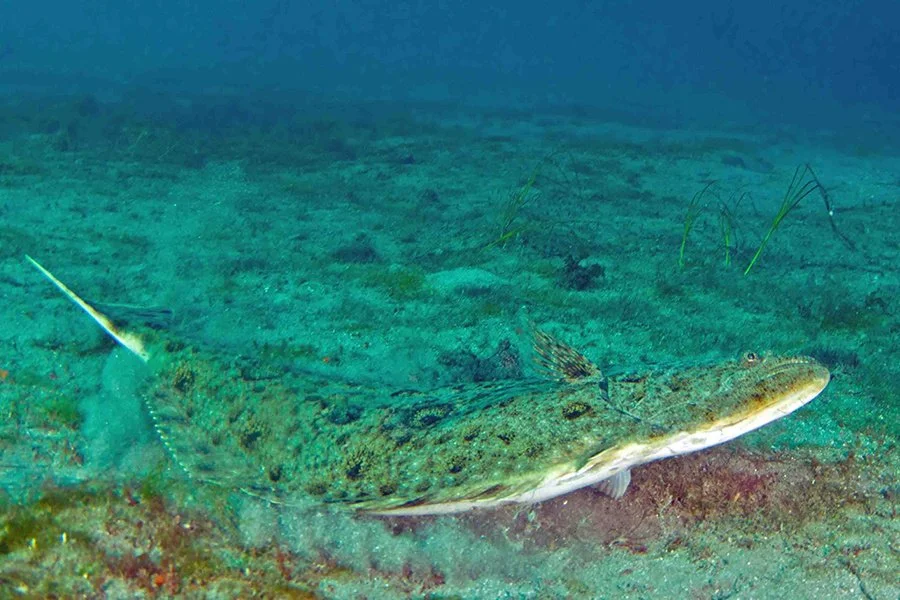
Pacific halibut. Credit: NOAA Fisheries
How should concern for fisheries shape research on ocean iron fertilization? Pacific halibut offer one example.
Research suggests that halibut generally avoid waters where dissolved oxygen falls below approximately 0.9 milliliters per liter. Other studies project that continued ocean warming and deoxygenation could substantially reduce suitable halibut habitat and impose major ecological and economic losses on the fishery.
Understanding oxygen sensitivities and depths used by fish may offer one tool for designing and governing ocean iron fertilization to minimize impacts on fisheries. Iron fertilization stimulates phytoplankton growth, and as some of that organic material sinks and decomposes, it consumes oxygen. Where that decomposition occurs and which species occupy those waters could therefore become important management questions.
During a workshop hosted by Global Ocean Health to help define research questions for future management of OIF, Brad Warren compared the depths used by Pacific halibut with the Gulf of Alaska's naturally occurring oxygen minimum zone. This low-oxygen zone lies at roughly 670 to 1,060 meters—deeper than the waters where halibut spawn, where new-hatched larvae spend their first days.
That comparison raised one possible question: Could OIF methods be designed so that organic material quickly sinks below important fish habitat?
Evaluating that possibility raises several further questions:
What marine species occupy oxygen-minimum-zone depths, and how sensitive are they to further oxygen loss?
How much sinking plankton would decompose before reaching those depths?
Could iron-deposition methods be designed to deliver organic material to the oxygen minimum zone before it breaks down?
How might sinking biomass alter the oxygen minimum zone, for example, by intensifying it or causing it to expand upward?
The proposed ExOIS field trial is designed to monitor carbon export and dissolved oxygen during and after a limited OIF treatment. These measurements could help determine where OIF-produced material breaks down and how oxygen responds at an experimental scale. That information could help to inform strategies to minimize fisheries risks as OIF and other methods of marine carbon removal are explored.
Recommended reading if you want to learn more:
Franco et al. on projected impacts of warming and deoxygenation on Pacific halibut habitat:
https://doi.org/10.1111/fog.12610
Kim et al. on projected effects of ocean deoxygenation on Pacific halibut fisheries:
https://doi.org/10.1016/j.ecolecon.2026.109127
“The Case for Ocean Iron Fertilization Field Trials” from the ExOIS community:
https://doi.org/10.1177/29768659261420631