Methane emissions from US urban areas 'widely' underestimated, satellite observations suggest
Methane is considered a "super pollutant" due to its role in global warming.
ABC News
By Julia Jacobo
March 26, 2026, 5:55 PM
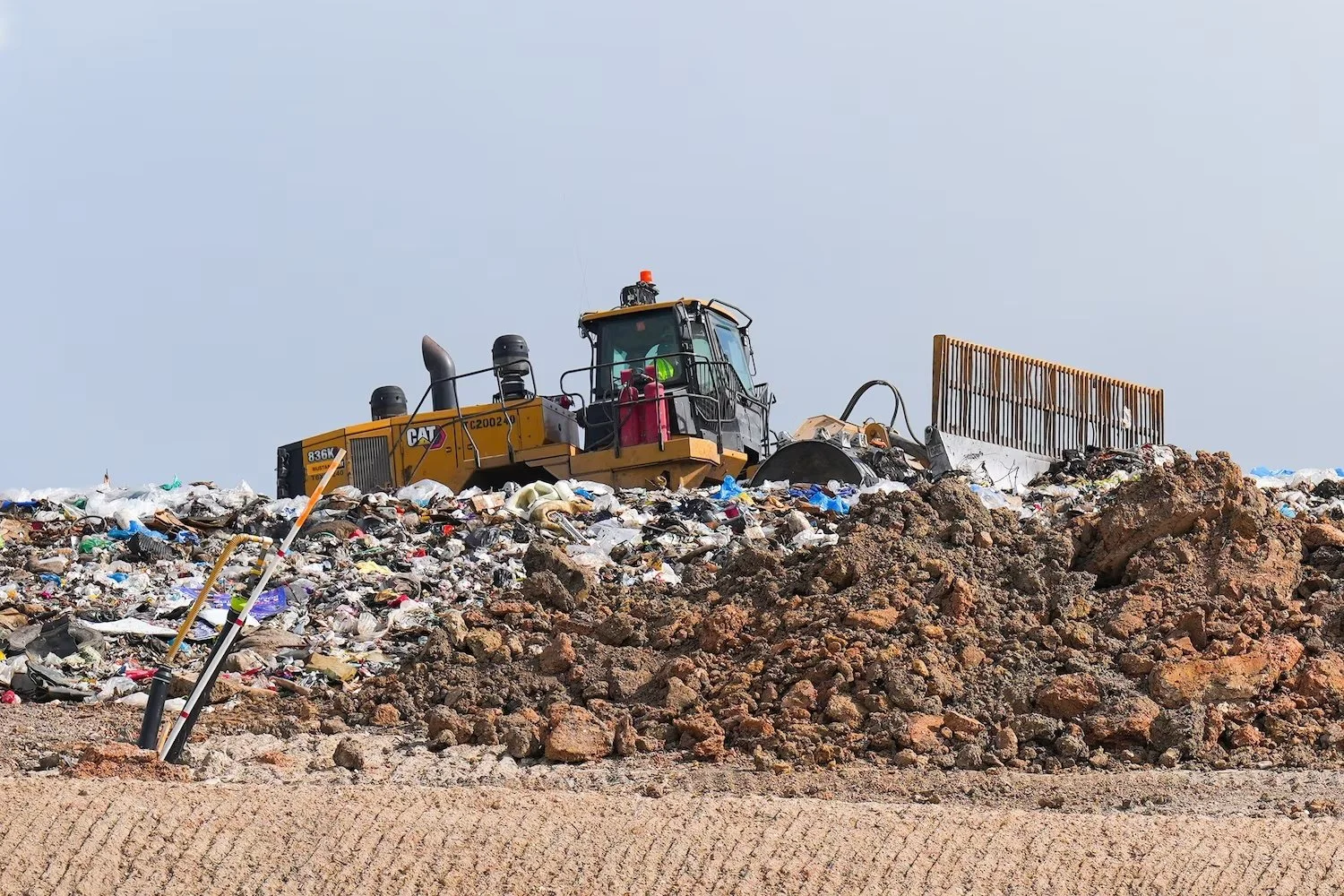
In this May 31, 2022, file photo solid waste is pushed along the working face of the McCarty Road Landfill, run by Republic Services in Houston. Brett Coomer/Houston Chronicle via Getty Images, FILE
Parts of the U.S. may be emitting much more of one of the most potent greenhouse gases than previously thought, according to new research.
Satellite observations suggest that methane emissions in urban areas may be "widely underestimated" – up to 80% higher than noted in the U.S. Environmental Protection Agency's Greenhouse Gas Inventory, an annual report that accounts for total greenhouse gas emissions and carbon sinks for all man-made sources in the U.S., according to a paper published Wednesday in Science.
Researchers analyzed satellite images taken by the TROPOspheric Monitoring Instrument (TROPOMI) on the Sentinel-5P satellite and found that emissions from 12 major urban areas – New York City, Los Angeles, Chicago, Philadelphia, Dallas, Miami, Houston, Washington, D.C., Atlanta, Boston, Detroit and Cincinnati – were emitting up to 80% more methane than reported by the EPA, according to the study.
The finding suggests that urban sources of methane, such as landfills and natural gas infrastructure, play a larger role in near-term climate warming than previously realized, Xiaolin Wang, a postdoctoral researcher in atmospheric science at Harvard University and lead author of the paper, told ABC News.
The EPA is not able to comment on external studies, a spokesperson told ABC News.
Urban areas have complex, population-driven methane sources, including landfills, natural gas distribution systems, wastewater treatment plants and residential combustion, Wang said.
In the U.S., these sources account for one-quarter of total anthropogenic, or human-caused, methane emissions, according to the most recent EPA Greenhouse Gas Inventory, which covers the years 1990-2022.